A research program spanning five books across four publishers.
A research program spanning co-creation, organizational transformation, and AI governance — developed across five books with Stanford University Press, Elsevier, De Gruyter, Palgrave Macmillan, and Springer Nature. These books provide the research foundation for KOZCAN Advisory System. Publication of the underlying research is distinct from validation of a specific KOZCAN Advisory client-facing method or finding; the advisory architecture has its own evidence, scope, and claim controls.
Research Stream 1
The Dynamic Relationality Theory Trilogy
The DRT trilogy develops a new theoretical architecture for the age of AI and organizational transformation. Across three volumes, it moves from foundational theory — what dynamic relational systems are — to organizational practice — how they can be transformed — to governance — what must be in place for AI-infused ecosystems to be genuinely intelligent rather than merely automated. The three books are designed to be read as a cumulative architecture, each volume building on the one before.
VOL. 1 ASKS
What is the relational nature of creative transformation?
VOL. 2 ASKS
How can organizations be redesigned as co-intelligent ecosystems?
VOL. 3 ASKS
When can transformed ecosystems legitimately be called intelligent and how does that intelligence remain governable?
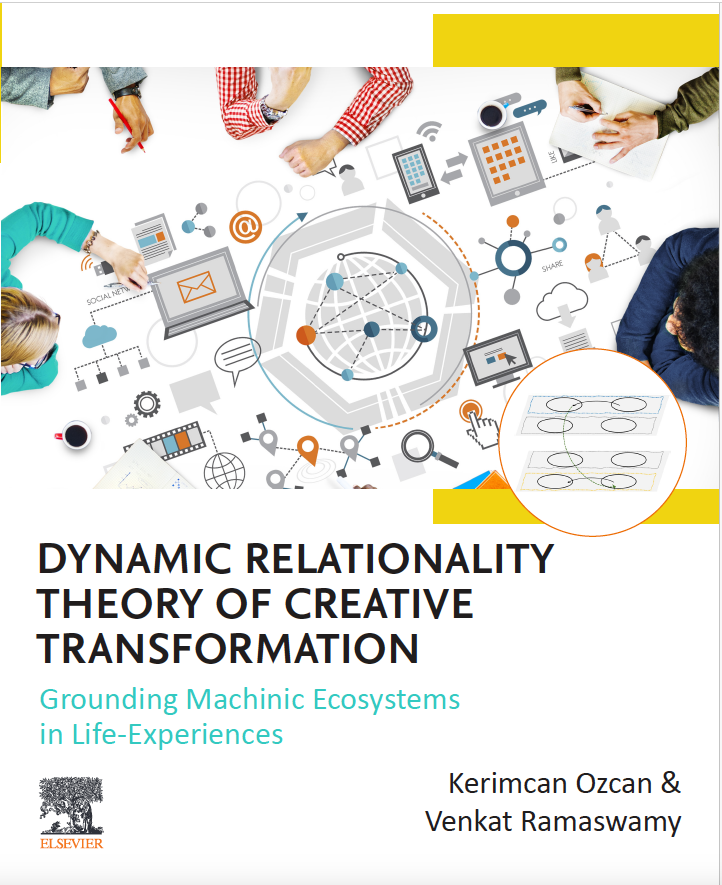
Dynamic Relationality Theory of Creative Transformation
Kerimcan Ozcan and Venkat Ramaswamy
Elsevier, 2024
The foundational volume. Argues that organizations and AI systems should be understood as dynamic relational assemblages — whose identities, capabilities, and futures emerge through continuous processes of interaction and transformation — rather than as fixed structures with static properties. Introduces Dynamic Relationality Theory as the ontological and conceptual foundation for the two subsequent volumes.
Trilogy role: Relational ontology and foundational theory.
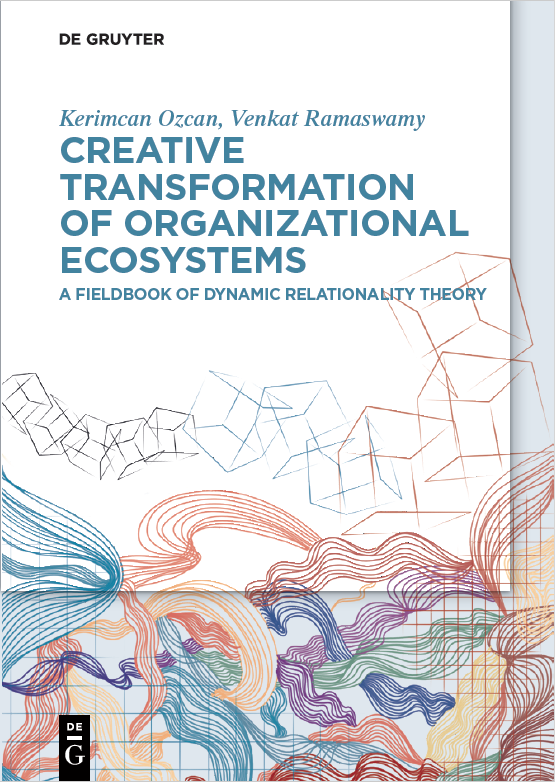
Creative Transformation of Organizational Ecosystems
Kerimcan Ozcan and Venkat Ramaswamy
De Gruyter, 2025
The methodological volume. Translates Dynamic Relationality Theory into organizational practice — tools, blueprints, and design methods for transforming organizations into adaptive co-intelligent ecosystems where human agency and AI capabilities continuously shape one another. Provides the transformation grammar for leaders, researchers, consultants, and system architects working in complex organizational environments.
Trilogy role: Organizational transformation grammar and intervention architecture.
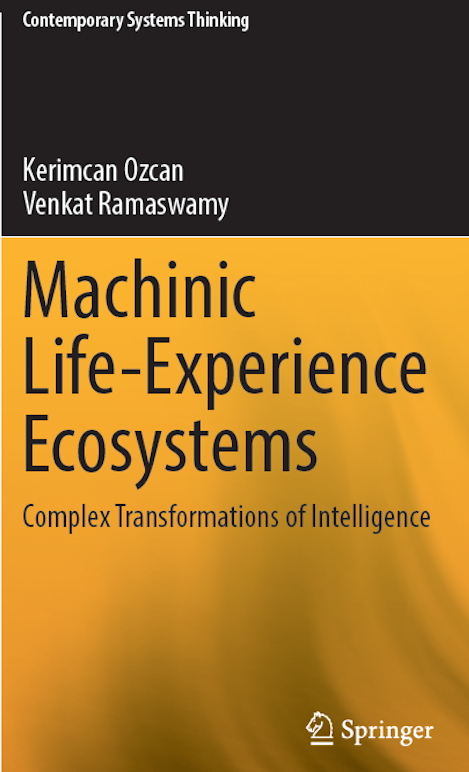
Machinic Life-Experience Ecosystems
Kerimcan Ozcan and Venkat Ramaswamy
Springer Nature, 2027
The governance volume. Asks what must be in place before an AI-infused organization can legitimately be said to have become more intelligent — not just more automated. Develops the standards, evidence, accountability, contestability, and repair frameworks that make AI transformation governable. Introduces the REAL governance framework and the MLXE Operating System as practical tools for organizations navigating complex AI-era transformation.
Trilogy role: Standards, evidence, governance, and repair layer for co-intelligence.
Research Stream 2
The Co-Creation Research Program
In parallel with the DRT trilogy, a second research program — developed with Venkat Ramaswamy and Krishnan Narayanan — examines how humans and AI systems co-create intelligence and value. This stream runs from the foundational argument for co-creation as a strategic paradigm to its translation into the AI era of co-intelligent organizations.
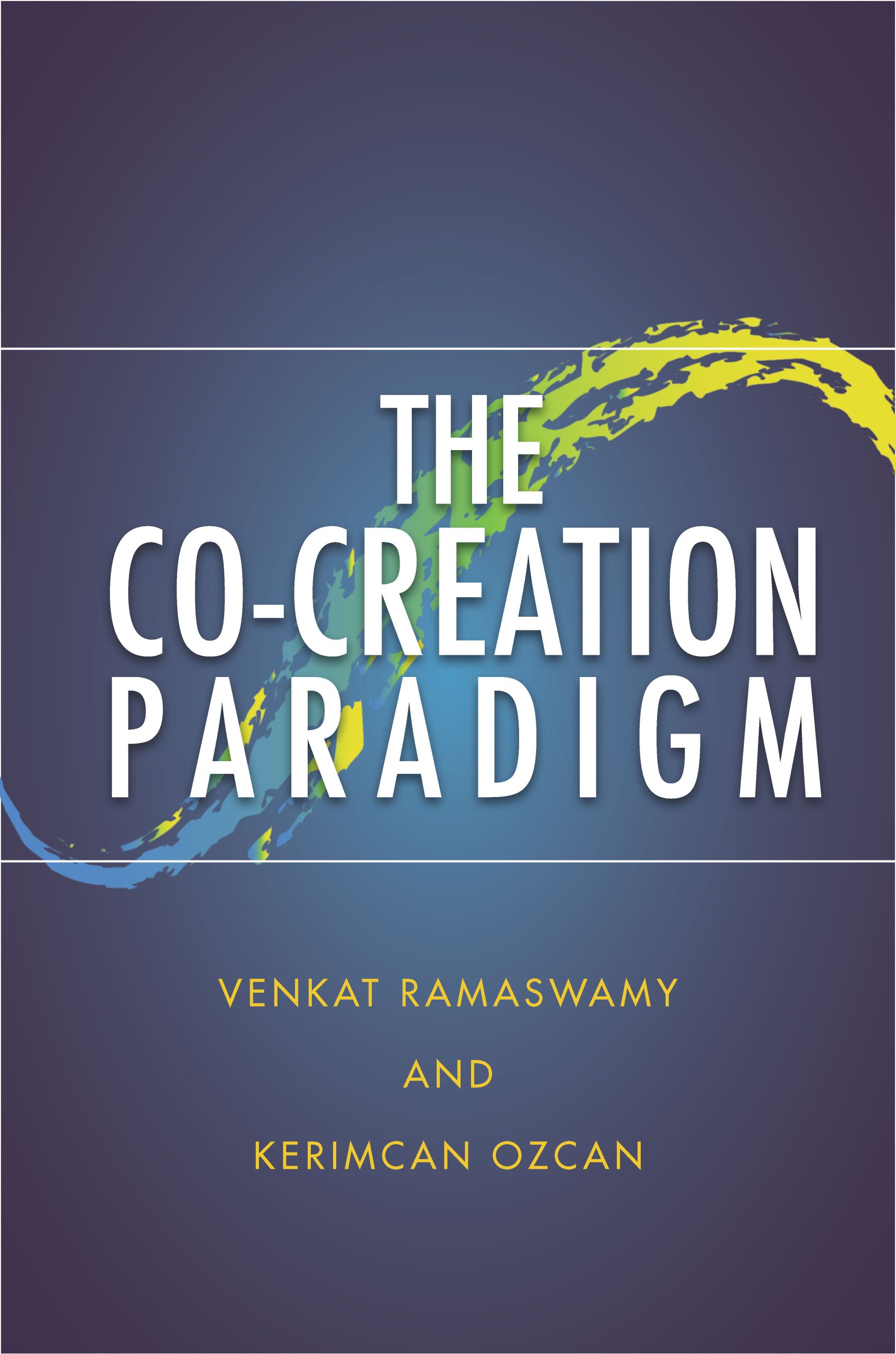
The Co-Creation Paradigm
Venkat Ramaswamy and Kerimcan Ozcan
Stanford University Press, 2014
The foundational text. Argues that value is created through active engagement between organizations and their stakeholders — not delivered by firms to passive consumers. Introduces the DART framework (Dialogue, Access, Reflexivity, Transparency) and the concept of engagement platforms, establishing co-creation as a strategic paradigm rather than a customer service initiative.
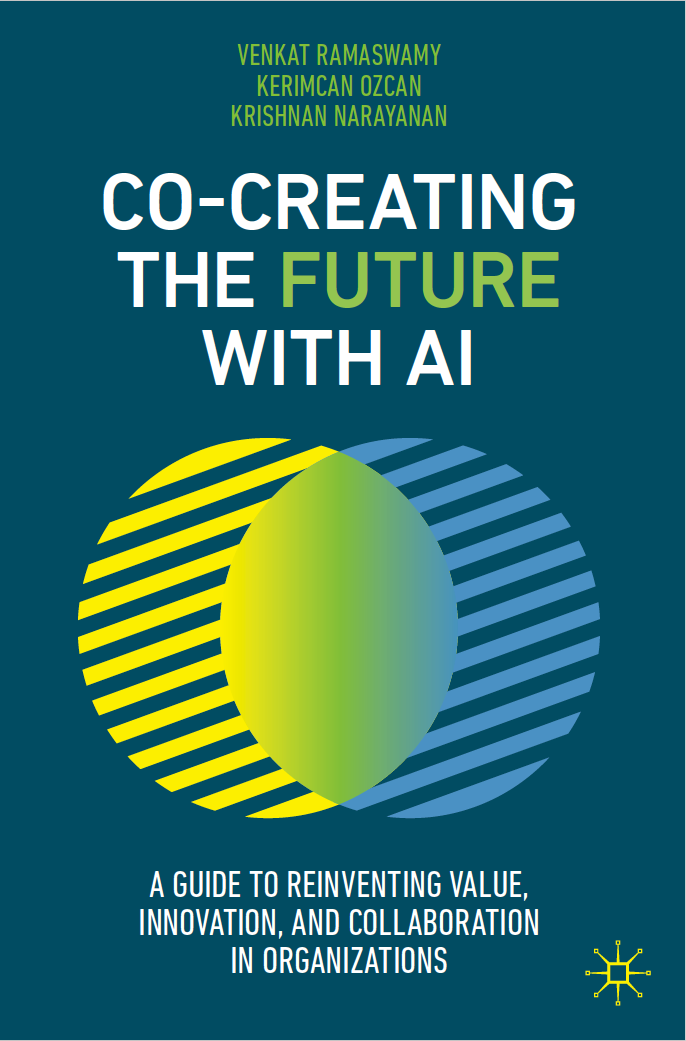
Co-Creating the Future with AI
Venkat Ramaswamy, Kerimcan Ozcan, and Krishnan Narayanan
Palgrave Macmillan, 2026
Translates the co-creation paradigm into the AI era. Introduces COIN — Co-Intelligent Organizational Networks — and shows how human-AI co-creation is transforming how organizations generate value, structure innovation, and build relationships with customers, partners, and ecosystems. Includes case studies from OpenAI, L’Oréal, SAP, Siemens, JPMorgan Chase, Tesla, and others.
In Preparation
The Fabric of Coherence
Governing AI Transformation Where Possibility, Movement, and Accountability Meet
Kerimcan Ozcan, In Preparation
A practitioner-facing synthesis of the DRT research program for boards, C-suite executives, and the consultants and executive-education programs that advise them. It translates the research program into a practitioner-facing governance architecture for consequential AI transformation while preserving the distinction between published theory, method construction, and evidence-supported client findings.
See how this research is translated into the KOZCAN Advisory System →
Interested in the research?
For the complete academic publication record, scholarly articles, and CV, visit kerimcanozcan.com. I’m happy to discuss the research program, speaking engagements, or executive education applications.
Get in touch: 